
Protecting Children Online: How to Prevent Online Exploitation and Trafficking

As the internet continues to shape the lives of our youth, the risks associated with digital platforms have grown alarmingly serious. Children and teens are spending more time online than ever before, whether through social media, gaming, or virtual learning. While these platforms offer connection, entertainment, and education, unfortunately, they also open doors to exploitation. Human traffickers and online predators are using these tools to lure, manipulate, and exploit youth, often without the knowledge of the people closest to them.
According to the National Center for Missing and Exploited Children, in 2024, the CyberTipline received 20.5 million reports of suspected child sexual exploitation. The majority of these reports involved Child Sexual Abuse Material (CSAM).
CSAM, sometimes referred to as child pornography, is a form of child sexual exploitation. Under federal law, it is defined as any image or video that depicts a person under the age of 18 engaged in sexually explicit activity.
A large number of these reports originated from social media platforms and gaming communities, where predators often pose as peers to gain a child’s trust. According to the FBI, financial sextortion schemes targeting minors have surged in recent years, with hundreds of known cases leading to tragic outcomes, including suicide.
One of the most effective tools traffickers and predators use is access. With just a smartphone, they can enter a child’s world without ever stepping foot near their home. That’s why awareness, communication, and digital security are more important now than ever before. Parents and guardians don’t have to be tech experts to protect their kids; they just need the right tools and knowledge.
What Can Schools Do?

Schools can take proactive steps to protect students by using AI-powered tools like Proxyware to reduce exposure to harmful digital content. Proxyware identifies threats on trusted platforms and malicious websites and disrupts harmful activity at its source. The system does not access or store personal user data; instead, it analyzes anonymized persona data to detect risks and neutralize threats before harm occurs.
By positioning itself as the “victim,” Proxyware removes digital harm at its source by notifying companies that are unknowingly serving malicious content. This prevents the same threats from reaching other users across the internet. Through this proactive approach, Proxyware eliminates up to 93% of the harmful content it detects. Rather than responding after damage has occurred, Proxyware stops harm before it reaches students, creating protection that extends far beyond any single location, device, or organization.
Proxyware is designed for easy deployment in school environments. Installation is simple—just plug the device into a power source and connect it to the network. Within minutes, schools can activate proactive protection that helps safeguard students across devices and locations.
Importantly, Proxyware is not intended to replace an existing security stack. Instead, it complements current network protections, firewalls, antivirus software, and student monitoring tools to strengthen overall digital safety.
What Can Families Do?
Start by establishing strong digital boundaries and protections. Parental control features built into devices are a good first line of defense. Apple’s Family Sharing and Screen Time tools let parents manage app usage, restrict content, and receive alerts when their child downloads a new app or receives messages from unknown numbers. Google’s Family Link offers similar controls for Android users. Third-party safety apps like Bark, Qustodio, and Aura can also monitor conversations, flag dangerous content, and limit screen time—all while respecting a child’s privacy.
But technology alone isn’t enough. Open and honest conversations are just as important. It’s key to talk with your children about what’s appropriate online, what red flags to look for, and when to come to you for help. Make sure they know they won’t be punished for telling the truth. Fear of getting in trouble is one of the biggest barriers that prevent young people from coming forward. Ask questions about who they’re talking to, what apps they’re using, and how they’re spending time online. Encourage transparency and build a relationship of trust, not surveillance.
The Warning Signs
Parents and guardians should also be aware of common warning signs indicating a child may either be at risk or currently experiencing exploitation. These red flags can include:
Sudden changes in behavior or appearance.
Secretive use of phones or computers.
Receiving expensive or unexplained gifts.
Withdrawal from family and long-time friends.
Signs of anxiety and depression
You might notice that a child becomes defensive or evasive when asked about certain relationships or how they’re spending time online. While these behaviors don’t automatically mean exploitation is happening, they do signal that something more may be going on, and they warrant attention.
Gaming platforms and messaging apps are another area of concern. Traffickers often use voice chat or direct messaging features on platforms like Discord, Roblox, Snapchat, or even Minecraft to initiate contact with youth. The obscurity of these platforms makes it easy for predators to pose as peers, form relationships, and gradually groom our youth. That’s why it’s vital to teach children not to share personal information with people they don’t know in real life and to be cautious when someone asks them to move a conversation to a more private platform.
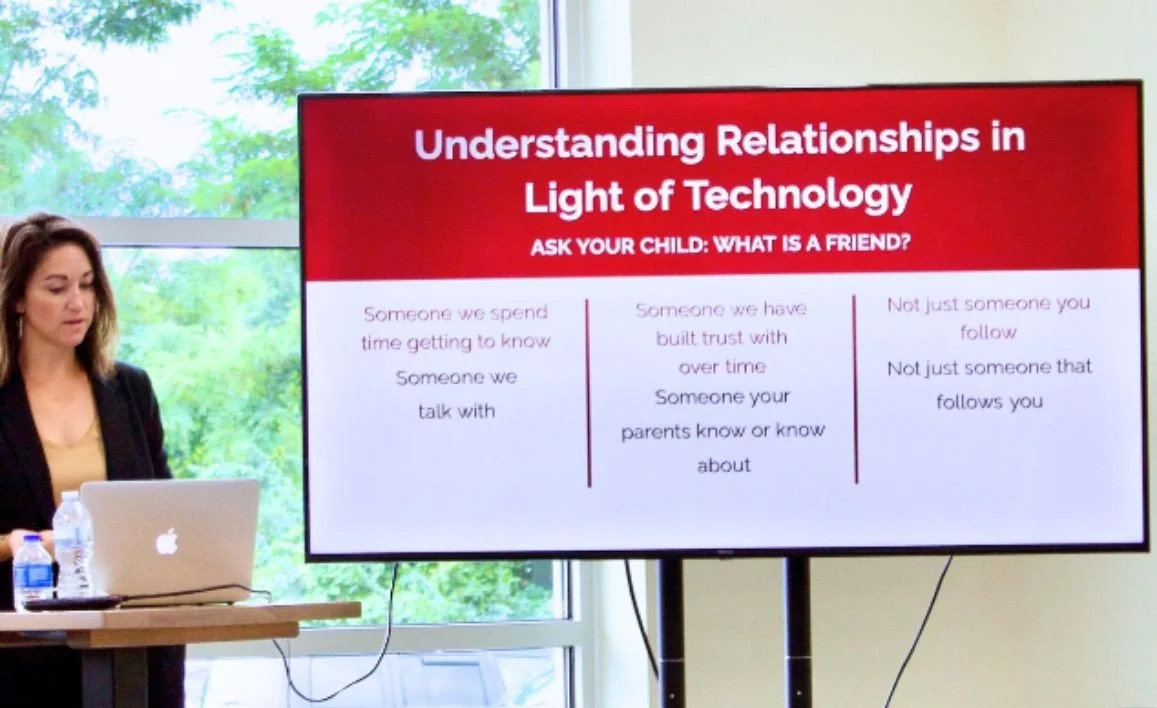
In response to the growing need for parent-focused education, Freedom 4/24 offers the Equipped Workshop, an asynchronous training led by a trained facilitator. This workshop equips caregivers (parents, grandparents, guardians, etc) with the tools, knowledge, and confidence to protect their children from the online dangers of human trafficking and sexual exploitation.
Through the Equipped Workshop, participants will learn:
The primary challenges facing today’s youth in digital spaces.
Risk factors and red flags associated with child exploitation.
Key elements of how trafficking can target youth.
How to build digital boundaries and open communication.
Protective strategies for social media, gaming, and texting.
How and where to report suspected exploitation.
This workshop doesn’t just inform, but it also empowers. Parents will walk away with practical steps they can take immediately, including how to implement safety settings, use accountability apps, and recognize subtle signs of danger. Most importantly, it teaches families how to create environments where kids feel safe enough to speak up, ask questions, and seek help when they need it.
Online exploitation isn’t a distant threat. It’s happening in every community, across every demographic, and often in plain sight. But we’re not powerless. With awareness, education, and active engagement, parents and caregivers can become the first line of defense.
To learn more or schedule a workshop for your school, church, or organization, request more information, and we will be happy to get you started. Prevention starts at home. Together, we can protect the next generation from exploitation.