
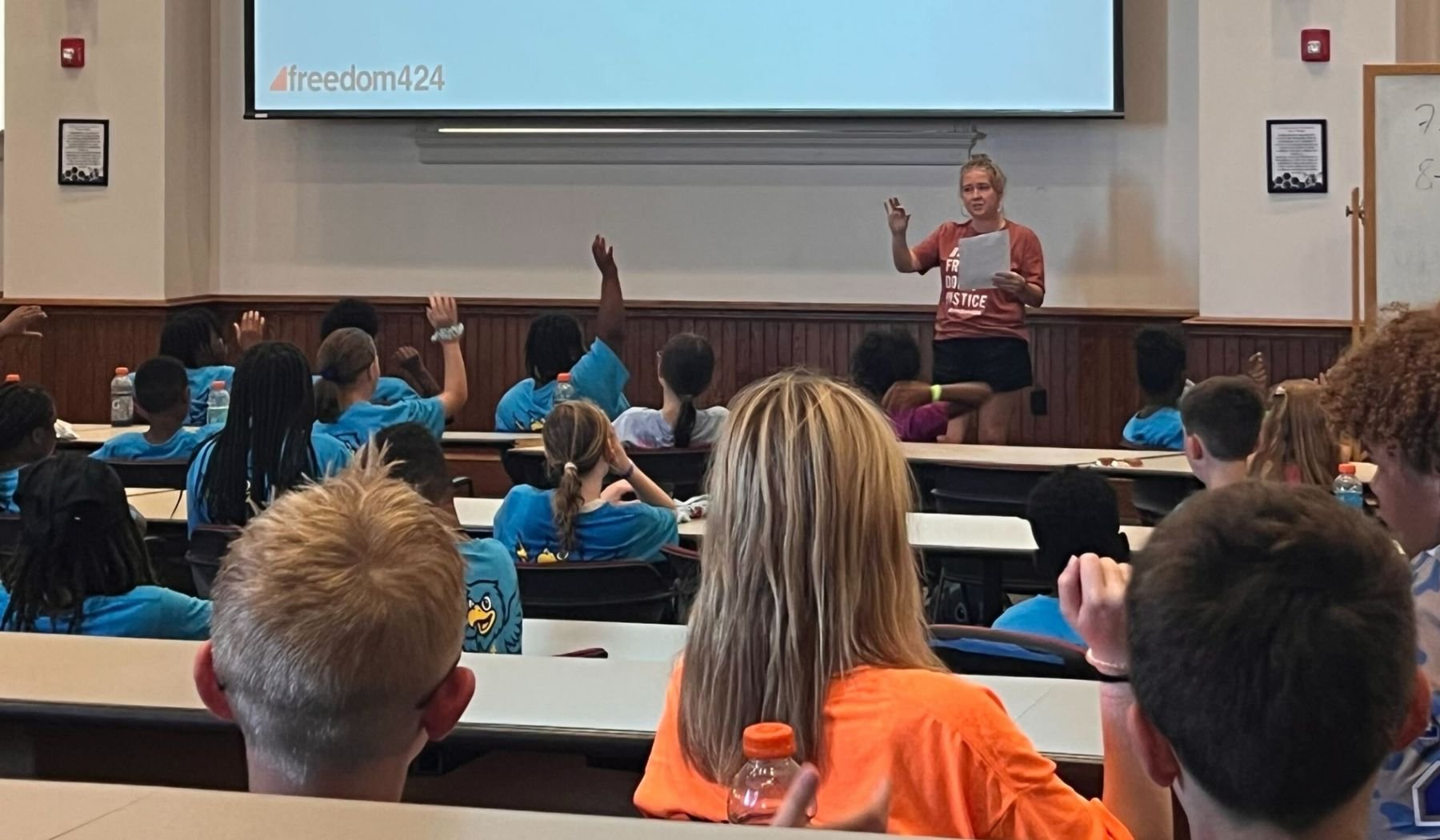
Lynchburg, VA – As Internet Safety Month brings attention to the risks children face online, Freedom 4/24 is celebrating the completion of another successful school year of its Human Trafficking Prevention Curriculum for Schools.
Developed for students in grades 5–12, the Human Trafficking Prevention Curriculum is an extensive package of educational materials aligned with Virginia's Family Life and Health Standards of Learning. The curriculum includes six modules featuring scripted lessons, videos, classroom activities, role plays, and real-world scenarios that help students navigate the challenges they face both online and offline.
With over 43,000 students enrolled, students have learned about healthy relationships, boundaries, consent, online safety, sextortion, exploitation, human trafficking, and how to seek help from trusted adults when something feels wrong.
While Freedom 4/24's curriculum is not currently taught in Lynchburg City Schools, students in surrounding communities, including Appomattox, Bedford, and Campbell counties, participate in the program. The curriculum has also expanded beyond Central Virginia, reaching students in multiple states across the country.
“Technology and virtual platforms are constantly evolving. As new apps, games, and tools are continuously created and adapted, there is no feasible way parents and caregivers can keep up with every online trend embedded in youth culture,” said Joy Cover, President of Freedom 4/24. “However, we can equip our youth to understand why they are targeted for exploitation through these platforms and how to recognize and respond to overarching risks to ensure safety and protection.”

The need for prevention education has never been greater. According to the National Center for Missing & Exploited Children, more than 456,000 reports of online enticement were received in a single year. Online enticement occurs when an adult communicates with a child online for sexual purposes, often using manipulation, grooming, or coercion.
Human trafficking is any time a vulnerable person is exploited using force, fraud, or coercion for something of value. This exploitation can begin online or in person and often begins with grooming. Grooming is a process in which predators build trust with a child before exploiting them. While many parents imagine predators lurking in dark corners of the internet, the reality is that they are often searching public social media and gaming platforms for vulnerable youth.
Research from the University of Toledo's Human Trafficking and Social Justice Institute found that traffickers often use social media to identify and target vulnerable youth. Experts reported that traffickers look for posts expressing loneliness, insecurity, or isolation, such as "Nobody gets me" or "I am so ugly," and use that information to build trust, groom children, and move relationships from online interactions to real-life exploitation.
These findings reinforced the importance of equipping young people with practical knowledge before exploitation occurs.
Freedom 4/24's curriculum was designed not only to help students recognize if exploitation is already happening, but to prevent this abuse before it begins. Through interactive lessons, students learn the warning signs of grooming, the characteristics of healthy relationships, the importance of consent, how to identify trusted adults, and what steps to take if they or a friend feels unsafe.
Student Testimonies

Student feedback continues to demonstrate the impact of prevention education.
One student shared, "It really helped teach people that abuse is not something you should deal with and you should let people know if or when it is happening."
Another student reflected, "I liked learning about red flags in relationships and learning personal boundaries in life."
When asked what they learned from the curriculum, students responded:
"That you can have different personal boundaries having to do with your time, body, feelings, belongings, and emotions."
"Talk to someone. Don't ever let anyone make you feel like they own you."
Another student noted that the curriculum opened their eyes to the realities of exploitation and abuse, helping them understand that many victims suffer in silence because they are afraid to speak up.
As Freedom 4/24 looks ahead to the upcoming school year, the organization remains committed to expanding prevention education and ensuring that students have the knowledge and confidence to protect themselves and others from exploitation.
To learn more about Freedom 4/24's Human Trafficking Prevention Curriculum for Schools, visit freedom424.org.
About Freedom 4/24
Freedom 4/24 exists to prevent human trafficking and exploitation, pursuing protection, dignity, and restoration for individuals and communities. Through prevention education, community training, survivor support initiatives, and strategic partnerships, Freedom 4/24 works to equip individuals of all ages with the tools and knowledge needed to recognize and prevent human trafficking and exploitation.
For more information on Freedom 4/24’s prevention education opportunities: